1. Introduction: The Dawn of Energy Independence in Poland
The landscape of the Polish energy sector is undergoing a historic transformation. For decades, the nation’s power grid relied heavily on centralized coal-fired plants. However, the rapid decentralization of energy—driven by over 1.3 million prosumers—has shifted the focus toward renewable energy integration.
In 2026, the conversation in Poland has evolved from “how many solar panels can I install?” to “how can I store my own power?” As the Polish grid faces increasing pressure from intermittent renewable sources, Solar Energy Storage Systems (BESS) have emerged as the most critical investment for achieving true energy independence and protecting against fluctuating market prices.
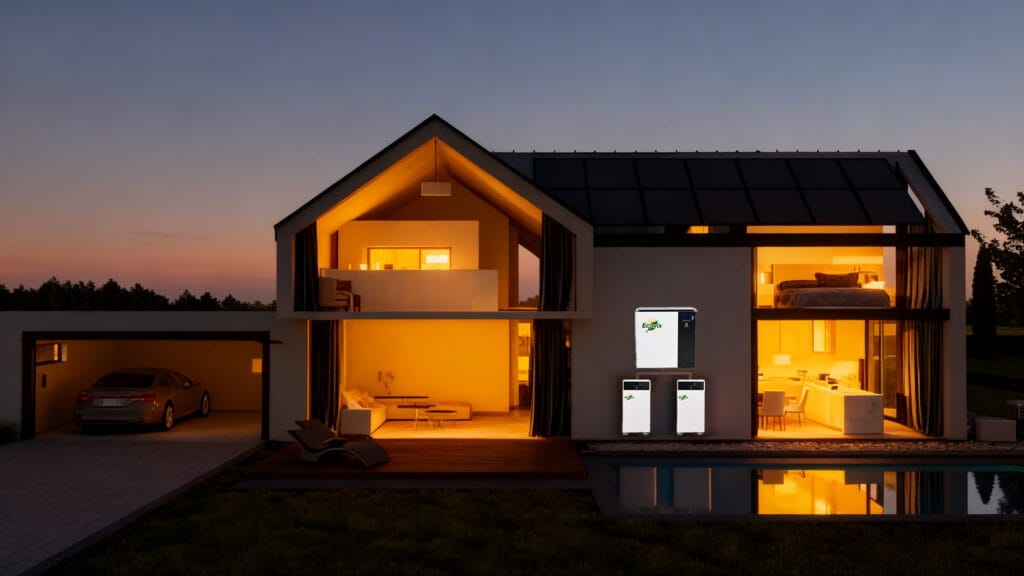
2. The Strategic Shift: Why 2026 is the “Year of Storage” in Poland
The Transition from Net-metering to Net-billing
The primary driver for the energy storage boom in Poland is the regulatory shift in how energy is accounted for. The old “Net-metering” system (Opusty) allowed prosumers to use the grid as a virtual battery with high efficiency. However, the current Net-billing system rewards users who maximize their self-consumption.
When you export energy to the grid, you sell it at the wholesale market price, but when you buy it back, you pay the full retail rate including distribution fees and taxes. This “price gap” makes storing energy on-site far more profitable than exporting it. By installing a solar battery, Polish homeowners and businesses can increase their self-consumption from a typical 20–30% to over 70–80%.
Grid Instability and Overvoltage Issues
The Polish distribution network (managed by DSOs like PGE, Tauron, Enea, and Energa) often struggles to handle the surge of solar power on sunny afternoons. This leads to overvoltage, causing solar inverters to automatically shut down to protect the grid. For a solar owner, this means losing hours of peak production. An energy storage system acts as a buffer, soaking up that excess energy when the grid is full, ensuring your system never stops producing value.
3. Financial Incentives and Government Subsidies in Poland
One of the reasons the ROI (Return on Investment) for energy storage has become so attractive is the robust support from both national and EU-funded programs.
The “Mój Prąd” (My Electricity) Program
Now in its advanced stages (v6.0 and beyond), the Mój Prąd program has been the backbone of the Polish solar miracle. In 2026, the focus has shifted heavily toward subsidizing storage. Current grants can cover a significant portion of the battery cost, provided it is integrated with a new or existing PV system.
The “Czyste Powietrze” (Clean Air) Program
For those renovating older homes, the Clean Air program offers combined subsidies for heat pumps and energy storage. Since heat pumps require significant electricity at night or during cold snaps, having a 10kWh or 15kWh battery allows the homeowner to power their heating system using “free” solar energy stored during the day.
Tax Relief: Ulga Termomodernizacyjna
Beyond direct grants, Polish taxpayers can take advantage of the Thermomodernization Relief. This allows you to deduct the costs of your solar storage system from your taxable income (up to 53,000 PLN), effectively providing a significant “discount” on the total project cost through tax savings.
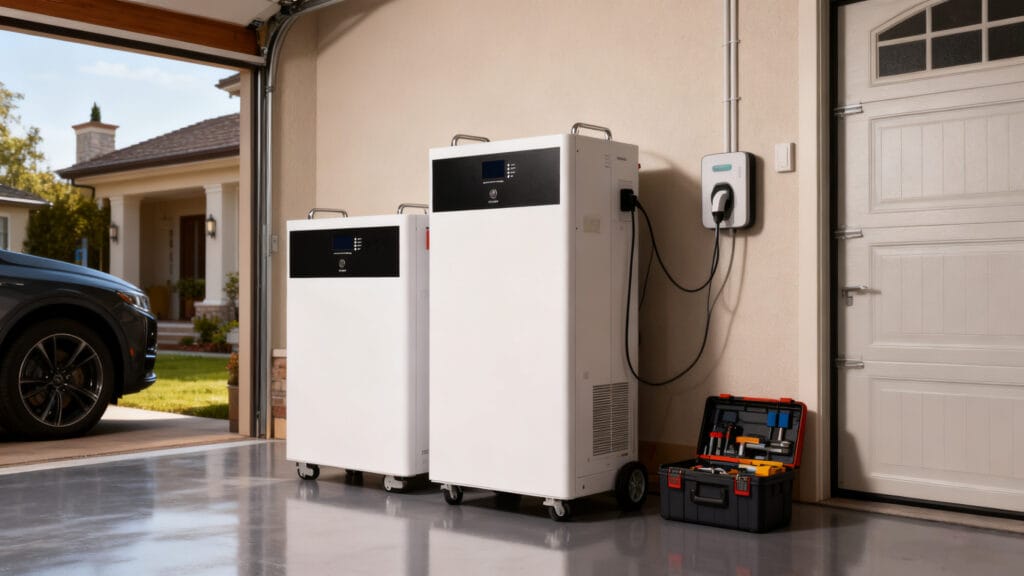
4. Technical Selection: Choosing the Right System for the Polish Climate
Poland’s climate requires hardware that can handle temperature fluctuations while maintaining high efficiency.
Why LiFePO4 (LFP) is the Gold Standard
When searching for a “Solar Energy Storage System in Poland,” you will find two main chemistries: NMC and LFP (Lithium Iron Phosphate). For the Polish market, LFP is the clear winner for several reasons:
- Safety: LFP is chemically stable and has a much lower risk of thermal runaway (fire).
- Longevity: LFP batteries typically offer 6,000 to 10,000 cycles, meaning they can last 15–20 years.
- Environmental Impact: They do not contain cobalt, making them more ethically and environmentally sound.
Three-Phase vs. Single-Phase Systems
Most modern Polish homes use a three-phase electrical connection. To ensure that your battery can power appliances across all phases (like your electric stove or heat pump), it is vital to select a three-phase hybrid inverter and a compatible battery stack. This ensures “phase balancing,” where the energy stored can be used to offset consumption regardless of which circuit the load is on.
5. Installation Guidelines and Safety Standards in Poland (2026)
Installing a solar energy storage system in Poland is no longer just a “plug-and-play” task; it requires strict adherence to updated technical and safety standards.
Fire Safety and Building Law Amendments (January 2026)
As of January 7, 2026, new amendments to the Polish Building Law (Prawo Budowlane) have clarified requirements for energy storage. For residential systems with a capacity exceeding 6.5 kWh, the installation project must now be consulted with a certified Fire Protection Expert (Rzeczoznawca ds. zabezpieczeń przeciwpożarowych).
- Location Matters: Batteries should ideally be placed in non-living areas with fire-resistant walls (e.g., garages or dedicated utility rooms).
- Ventilation: LFP batteries, while safer than NMC, still require adequate thermal management to prevent performance degradation during heatwaves or high-load discharging.
Certification Requirements
To ensure your system is eligible for subsidies and grid connection, every component (battery and inverter) must carry the CE marking and comply with EU Regulation 2019/631 and the Polish grid code. Look for equipment that has been tested under the UL 9540A standard, which is increasingly becoming the industry benchmark for fire safety in the Polish insurance market.
6. Grid Connection (DSO) and Reporting Procedures
Navigating the bureaucracy of the Distribution System Operator (DSO)—whether it’s PGE, Tauron, Enea, or Energa—is a multi-step process that must be handled precisely.
The Notification Process (Zgłoszenie)
For systems under 50 kW (Micro-installations), the process is generally simplified into a “Notification” rather than a full “Grid Connection Permit.”
- Application (Wniosek WPW): You must submit a formal notification to your local DSO at least 30 days before the planned commissioning.
- Technical Documentation: This must include the single-line diagram (Schemat Jednokreskowy) of the installation, showing the integration of the PV panels, hybrid inverter, and the energy storage unit.
- Inverter Certificates: The most common reason for application rejection (approx. 60-70% of cases) is missing or non-compliant NC RfG (Requirements for Generators) certificates for the inverter. Ensure your supplier provides the Polish-specific certification.
Mandatory Reporting for Energy Storage
Under the Energy Law, any energy storage facility with a capacity greater than 50 kW must be entered into the central Register of Energy Storage (Rejestr Magazynów Energii) maintained by the DSO. For homeowners (under 50 kW), the registration is done automatically through the micro-installation notification, but for businesses, failing to register a larger BESS can lead to significant financial penalties (ranging from 500 PLN to 5,000 PLN or more).
The Role of Smart Meters
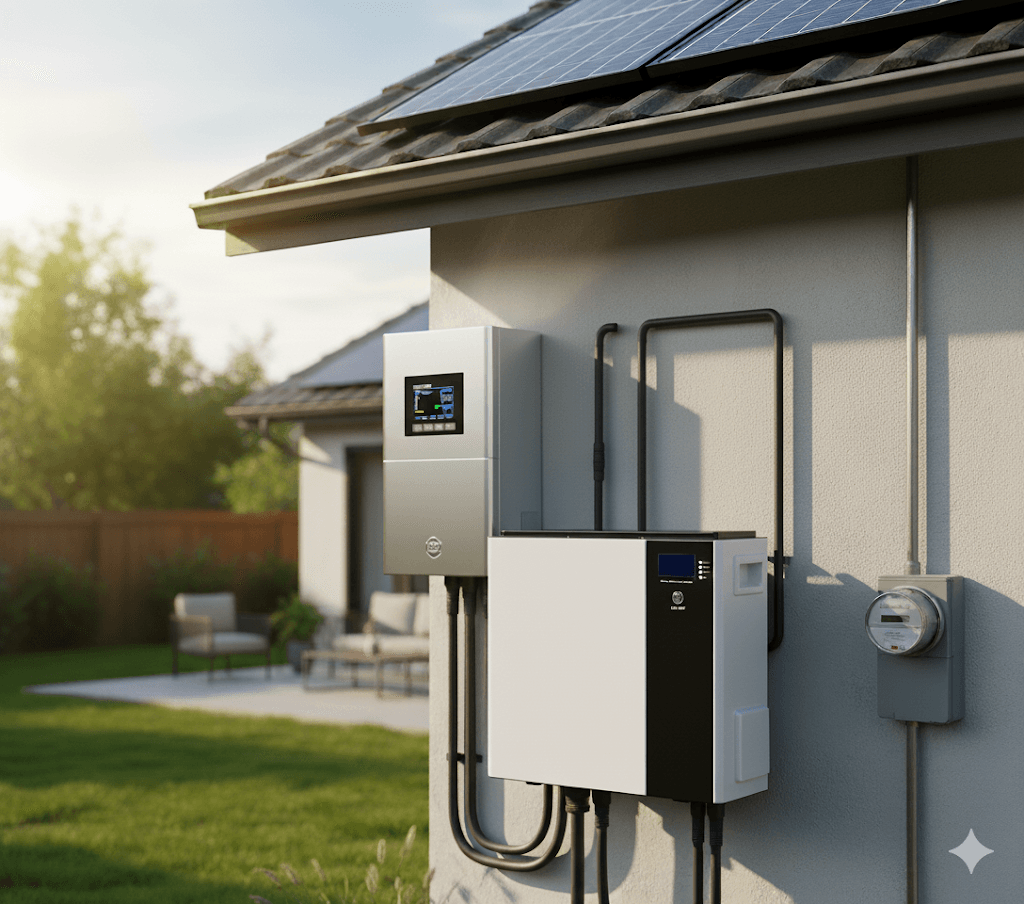
Upon approval, the DSO will install (if not already present) a bi-directional smart meter. In 2026, these meters are essential for the Net-billing system, as they provide real-time data to the “Central Energy Market Information System” (CSIRE), allowing you to track exactly how much you saved by using your stored energy instead of selling it at low wholesale rates.
7. Commercial and Industrial (C&I) Applications: A Strategic Edge
For Polish enterprises, energy storage is not just about saving; it’s about Strategic Demand Management.
Peak Shaving for Polish Businesses
Industrial electricity tariffs in Poland often include a heavy “Capacity Fee” (Opłata mocowa). By discharging the battery during the DSO’s peak hours (typically 7 AM – 10 PM), businesses can “shave” their peak consumption. This reduces the contracted power capacity requirement, which can save a medium-sized factory tens of thousands of PLN annually.
Uninterrupted Power Supply (UPS) for Agriculture
In rural Poland, grid reliability can be a challenge. For dairy farms or automated poultry houses, a power outage is a catastrophic risk. Modern 3-phase storage systems provide a seamless backup (often with a switchover time of less than 20ms), ensuring that automated feeding and cooling systems remain operational regardless of the grid’s status.